




Recognising the early signs of rising damp, but it is crucial to avoid diagnosing damp issues yourself. Many homeowners try to interpret these signs and end up choosing the wrong rising damp treatment, which leads to wasted time and money. The safest first step is to arrange professional damp surveys, as only a trained surveyor can confirm whether rising damp is present or if the symptoms are being caused by something completely different.
Rising damp is one of the most common moisture issues found in Irish homes, especially older houses built without effective damp-proofing. In this article, we’ll walk through the visible signs, subtle indicators, and hidden symptoms you should look out for.
Why Rising Damp Creates Noticeable Symptoms
Rising damp occurs when groundwater is drawn upward through the porous structure of a wall due to capillary action. As this moisture rises, it carries dissolved salts from the soil, which settle on the wall as the water evaporates.
This combination of moisture + salt is what causes most of the visible damage inside the home.
Before jumping into repairs, it’s important to confirm that the problem is truly rising damp and not condensation or penetrating damp. A professional inspection, typically carried out through detailed damp surveys, can accurately diagnose the issue.
1. Tide Marks on Walls
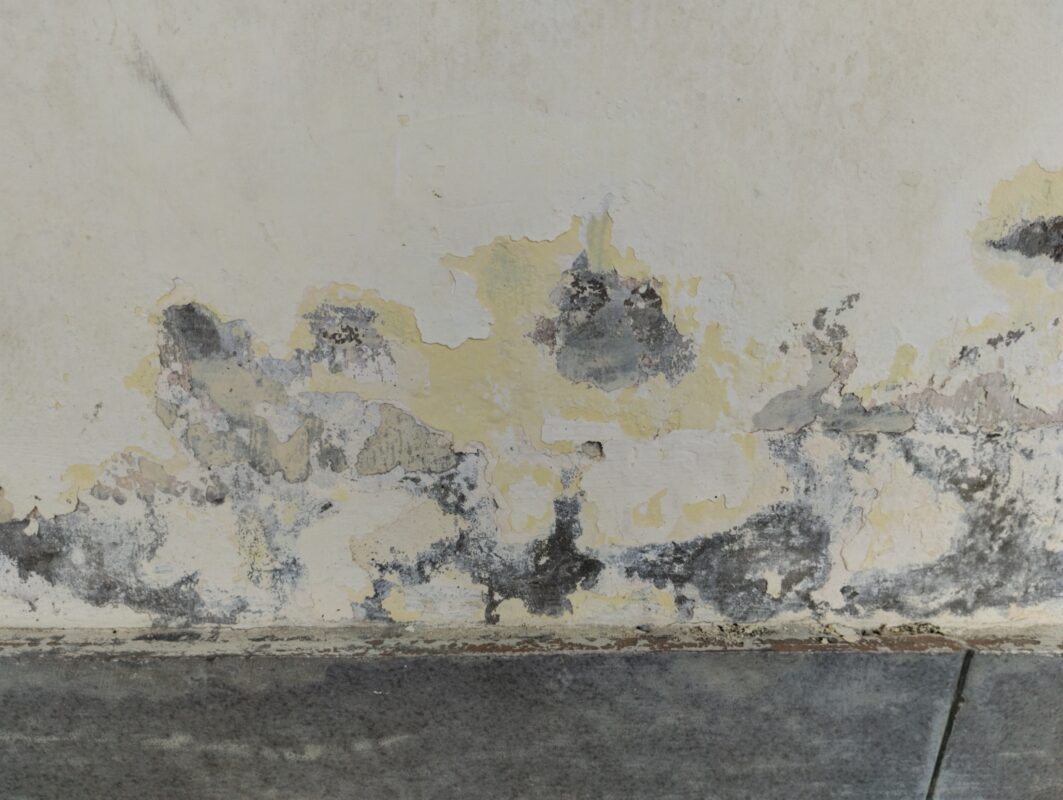
One of the most distinctive signs of rising damp is the presence of tide marks on internal walls. These marks usually appear:
- Up to one metre above the floor
- As brown, yellow, or discoloured patches
- With crisp, horizontal edges
Tide marks form as moisture evaporates, leaving salt deposits behind. If the plaster feels cool or damp to the touch beneath these marks, rising damp is a strong possibility.
2. White Powdery Salts (Efflorescence)
As groundwater rises through the wall, it carries natural salts from the soil. When the moisture evaporates, these salts crystallise on the wall surface. This appears as:
- Fine white powder
- Fluffy or chalky crystals
- Salt staining on skirting boards or plaster
These salts can reappear even after cleaning, making it one of the most persistent indicators of rising damp. Efflorescence is often misdiagnosed, so this is where damp surveys are especially useful.
3. Peeling, Bubbling, or Flaking Paint
When moisture builds up within the wall structure, it pushes outward and causes paint to lose adhesion. Common warning signs include:
- Bubbles underneath the paint
- Peeling paint close to the skirting board
- Blistering patches that don’t dry out
Even freshly painted walls can start peeling within weeks if rising damp is present.
4. Crumbling or Damaged Plaster
This is one of the clearest indicators of a long-term moisture problem. Rising damp can cause plaster to:
- Turn soft or crumbly
- Bubble or lift from the wall
- Crack or powder when touched
Salt contamination makes standard plaster break down faster. If plaster crumbles when lightly pressed, the wall likely has been exposed to moisture for some time.
5. Damaged or Warped Skirting Boards
Skirting boards can reveal a great deal about hidden moisture. Look for:
- Warping or bulging
- Soft or rotten timber
- Staining near the base
- Gaps forming between skirting and wall
Timber is highly vulnerable to moisture and often deteriorates early when damp is present.
6. Damp or Musty Odours
A persistent musty smell, especially in ground-floor rooms, can signal rising damp. Moisture trapped within walls encourages mould growth and creates a stale smell that is unmistakable. Even if you don’t see visual damage, odour alone can be an early warning sign.
7. Cold, Moist Walls
Another subtle but important sign is the temperature difference between damp areas and surrounding walls. Touch the lower part of the wall, if it feels significantly colder and slightly damp, there may be rising moisture inside the masonry.
8. Mould Patches Near the Floor (Less Common but Possible)
While mould is more commonly associated with condensation, mould appearing low on ground-floor walls may indicate rising damp, especially when paired with the other signs listed above.
9. Deterioration of Flooring Materials
In more advanced cases, rising damp can spread to flooring components. This may appear as:
- Lifting or warping wooden floors
- Expansion of laminate boards
- Discolouration of floor edges
- Damp carpet backing
When flooring starts failing, the moisture level is usually already quite high.
How to Confirm These Signs Are Rising Damp
Because many issues—like poor ventilation or leaking pipes—can mimic rising damp, confirmation is essential. Professional damp surveys typically include:
- Moisture readings at various wall heights
- Salt analysis
- Examination of the existing damp-proof course
- Assessment of ventilation and drainage
- Inspection of external ground levels
Accurate diagnosis prevents unnecessary repairs and ensures the right solution is applied.
Why Treating Rising Damp Quickly Matters
Once rising damp is confirmed, homeowners should act quickly to avoid long-term structural and health problems. The appropriate rising damp treatment mid-article placement helps:
- Stop moisture moving further up the wall
- Prevent recurring damage to plaster and paint
- Protect timber from rot
- Eliminate musty smells and mould-prone conditions
- Restore comfort and warmth inside the home
Rising damp does not go away on its own. Without intervention, the damage will continue to spread upward.
Knowing the signs of rising damp helps you catch the problem early and prevent long-term damage.
With expert assessment and the right treatment plan, you can protect your home from long-term damage and maintain a healthier, drier environment.
