



Mould Removal Ireland
Black mould on walls, ceilings, and bathrooms – Dampdoctor removes it permanently and identifies the root cause so it does not come back. Covering homes, rental properties, and commercial premises across Ireland.
What Is Mould and What Causes It?
Mould is a symptom of an underlying issue. Treating mould without identifying the source can lead to ongoing health problems, wasted money, and recurring issues.
At Dampdoctor, our expert teams use advanced Mould Removal Treatment methods and technology to not only identify and eradicate mould but also address the underlying cause, ensuring your home remains healthy, safe, and mould-free. Taking action early is key to protecting both your health and your property.
Mould develops where excess moisture is present and conditions allow it to grow. Condensation is one of the leading causes of damp and mould problems in Irish homes, often associated with excess moisture, inadequate ventilation and cold surfaces. Black mould on walls and ceilings, particularly in bedrooms and bathrooms, is the most visible result. But mould can also follow a water leak, flooding, rising damp, or penetrating damp – which is why treating the surface without identifying the source almost always leads to the mould returning within weeks.
Mould spreads quickly. Spores are airborne and can travel through a property, establishing new colonies in other rooms before the original outbreak is even visible. Without addressing the underlying cause, mould can continue to develop and recur, even after visible mould has been removed.
Professional mould removal and treatment involves more than simply cleaning affected surfaces. Dampdoctor’s comprehensive approach includes professional assessment, specialist mould treatment and, where appropriate, fogging and ozonation to support the remediation process.
At Dampdoctor, we recommend a professional on-site inspection before mould treatment to identify the extent of the problem, investigate the underlying moisture sources and recommend the most appropriate treatment. This helps ensure that both the visible mould and the factors contributing to its growth are addressed, reducing the risk of recurring mould problems.

How the Dampdoctor Mould Survey Works

3-PHASED Mould Removal Treatment
At Dampdoctor, we offer a unique, tailored mould removal treatment service. Our process ensures that all treatments work together to complement each other, effectively sanitising and neutralising the air while eradicating mould spores, or “seeds.” Since mould is often a symptom of an underlying issue, we highly recommend an onsite inspection before any treatment to ensure the mould does not return and to achieve the best possible results. Dampdoctor use only the highest quality products to treat mould in your home or business, providing long-term solutions and peace of mind. We also provide certification of treatment for your building, acting as dated documentary proof that all mould issues have been effectively addressed.
The certification of treatment is particularly important for landlords, property managers, and anyone dealing with an insurance claim or a property sale. It provides independent, dated documentation that professional mould removal treatment has been carried out to the highest standard – something a DIY approach or off the shelf mould spray cannot provide.

Step 1 – Mould Removal
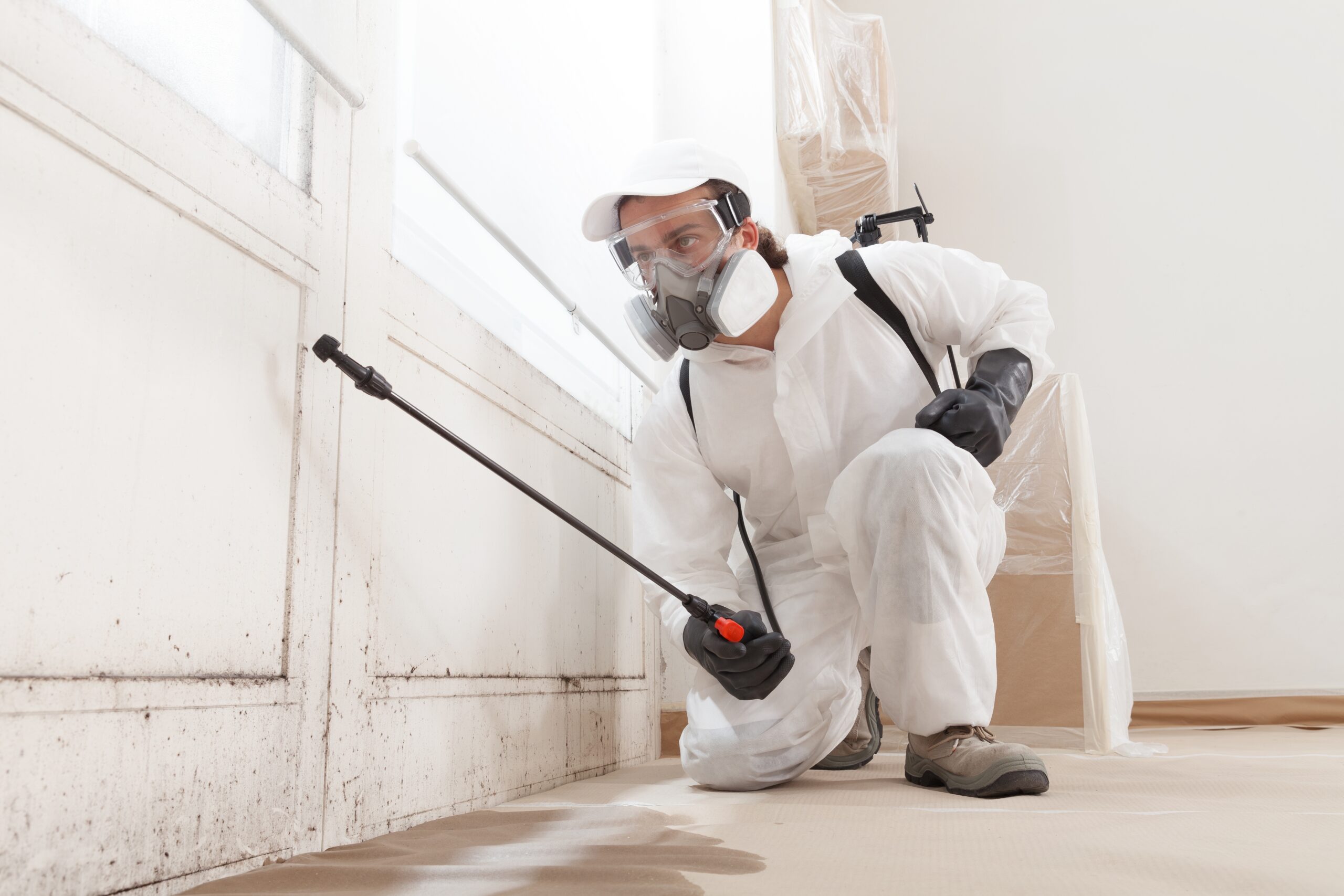
Professional-grade mould removal products are used, applied correctly and safely. This is not a surface wipe — it is a thorough treatment of all affected areas, including behind fittings and in corners where mould spore colonies often establish before becoming visible. Safe occupancy guidance is provided where required.
Step 2 – Fogging
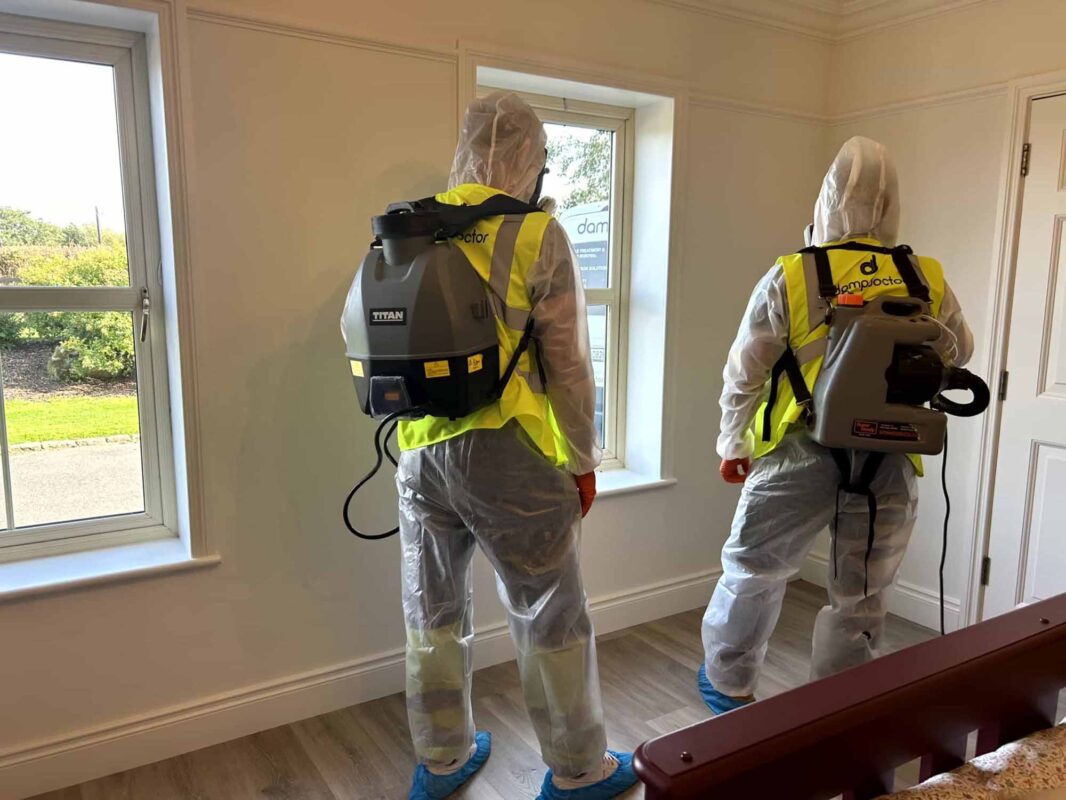
At Dampdoctor, we use fogging to treat affected areas and eliminate harmful mould spores, ensuring a thorough and effective solution. If necessary, we can apply this treatment throughout your entire property, preventing the spread of mould and stopping new colonies from forming in other rooms. Our fogging application method is particularly effective at reaching even the most difficult-to-access areas, providing comprehensive protection for your home or business.
Fogging is particularly effective in properties where mould spores have spread beyond the visible outbreak – into soft furnishings, carpets, and areas behind furniture. The fog penetrates spaces that surface treatment cannot reach, neutralising airborne spores throughout the property.
Step 3 – Ozonation
At Dampdoctor, our Ozone treatment is particularly effective at targeting and eliminating the lingering smell of damp. It works by reaching even the smallest nooks, crannies, and cracks—areas that are otherwise difficult to access. This comprehensive treatment not only eliminates harmful mould spores and bacteria but also removes stubborn odours, ensuring your home or business is left with fresh, clean air. Whether it’s damp smells or mould, our ozone treatment method delivers a thorough solution to restore a healthy, pleasant environment throughout your property.
By combining professional mould removal, specialist surface treatment, fogging and ozonation, Dampdoctor provides a comprehensive, multi-stage approach to mould remediation, helping to improve indoor environmental conditions and reduce lingering mould-related odours.
Our approach also focuses on identifying and addressing the underlying moisture problems contributing to mould growth, helping to minimise the risk of recurring damp and mould.
Can I remove black mould myself?
Many people attempt black mould removal with supermarket sprays, bleach, or vinegar before contacting a professional. These approaches can reduce visible surface mould temporarily, but this approach does not eliminate it permanently — as it does not address the moisture source that allowed the mould to grow in the first place. Mould that has been surface-treated will typically return within weeks and sometimes days if the underlying humidity or damp problem is not resolved.
Bleach kills surface mould on non-porous materials like tiles and glass, but it does not penetrate porous surfaces like plaster, timber, and grout, where mould roots (hyphae) run deep. Vinegar has some antifungal properties but is similarly limited in scope. Neither provides the airborne spore elimination that fogging and ozonation achieve, which means treated properties often continue to have elevated spore counts even when the visible mould is gone.
Black mould in particular — Stachybotrys chartarum — requires careful handling. High concentrations of spores can be released during treatment if the correct containment and ventilation procedures are not followed. Professional mould removal services use specialist equipment and techniques that minimise spore dispersal during the removal process, protecting both the occupants and the rest of the property.
Dampdoctor does not recommend DIY mould removal, even where mould growth appears minor or confined to a small area. Disturbing mould during cleaning can release airborne mould spores, potentially spreading contamination to other areas of the property and causing adverse reactions, particularly in individuals with allergies, asthma or respiratory sensitivities.
Visible mould may also indicate an underlying moisture problem, such as condensation, inadequate ventilation, rising damp or penetrating damp, which surface cleaning alone will not resolve.
A professional mould assessment is the safest starting point. Dampdoctor’s qualified specialist surveyors can investigate the extent of mould growth, identify potential underlying causes and recommend the most appropriate professional mould removal and treatment to minimise the risk of recurring mould problems.
Mould removal services for landlords and property managers
Landlords in Ireland have a legal obligation to provide rental properties that are free from damp and mould. Where mould is present and recurring, treating the surface alone is not sufficient — and is unlikely to satisfy a local authority inspection or a tenant complaint to the RTB. The causes should be identified and addressed.
Dampdoctor works with landlords and property management companies across Ireland to provide professional mould inspection and targeted recommendations, removal treatment, and written certification of treatment. Our reports identify the cause of the mould, document the treatment carried out, and are suitable for submission to local authorities and insurers.
Where condensation is identified as a contributing factor, Dampdoctor can design and install a tailored ventilation system based on the property’s specific layout, ventilation requirements and airflow capacity. Our professional condensation and ventilation solutions focus on effective moisture control, reducing excess humidity and condensation, and helping to prevent recurring mould growth through a properly designed and configured ventilation system.
For property managers overseeing multiple units, Dampdoctor provides a consistent, documented mould removal service that meets the standards required for compliance — with the certification to prove it.
Our Customer Reviews
Frequently asked questions about mould removal in Ireland
Professional mould removal involves three stages. First, visible mould is treated and removed from all affected surfaces using specialist products. Second, fogging neutralises airborne mould spores throughout the property – including in areas that surface treatment cannot reach. Third, ozonation eliminates lingering damp odours and any remaining spores, leaving the property with clean indoor air. A professional service comes first and includes an on-site inspection to identify the underlying cause – condensation, damp, or water ingress – and recommend the steps needed to prevent the mould from returning.
The cost of professional mould removal in Ireland depends on the size of the affected area, the property type, and the level of treatment required. A single-room treatment will cost less than a whole-property service including fogging and ozonation. Dampdoctor will provide a clear quote following an on-site inspection. Contact us to arrange an assessment.
Yes – mould can be fully removed from a property when the correct treatment is applied and the underlying cause is addressed. Professional treatment that combines surface removal, fogging, and ozonation eliminates both visible mould and airborne spores. However, if the moisture source – condensation, a leak, or rising damp etc – is not identified and fixed, new mould will establish in the same conditions. This is why Dampdoctor always inspects before treating.
The only reliable way to prevent black mould from returning is to change the environment. Depending on the cause, this may mean improving ventilation, fixing a water leak, treating rising damp, or addressing penetrating damp. Surface treatment alone – whether professional or DIY – will not prevent recurrence if the underlying moisture problem remains. Dampdoctor identifies the cause during the on-site inspection and recommends the appropriate follow-on treatment. See our condensation and ventilation solutions and damp survey service for more.
For treatment the property or the treated areas should be vacated temporarily – your Dampdoctor contact will advise on the specific requirements for your treatment. After ozonation, the property one can return to the property after 60 minutes following completion of treatment. All guidance will be provided before treatment begins.
Black mould can pose health risks, particularly to children, the elderly, and people with respiratory conditions or compromised immune systems. Mould spores can trigger allergic reactions, worsen asthma, and in high concentrations cause more serious respiratory symptoms. Prolonged exposure to damp, mouldy environments is associated with a range of health complaints. This is why GPs are increasingly referring patients with unexplained respiratory symptoms for property inspections. Dampdoctor recommends professional treatment for any mould outbreak rather than attempting prolonged DIY management.
Dampdoctor provides written certification of treatment after mould removal service completion where required. This is a dated documentary record that professional treatment has been carried out, confirming what was done, and that the property has been treated. Certification is particularly important for landlords, insurance claims, and property sales where documented evidence of treatment is required.
For significant or recurring mould problems, professional mould removal is almost always more cost-effective in the long run than repeated DIY treatment. DIY approaches treat the surface but not the cause, meaning the mould returns and the cycle continues. Professional treatment identifies the cause, eliminates the mould comprehensively including airborne spores, and provides certification. For landlords in particular, professional treatment with certification is the appropriate response to a tenant complaint and the standard that local authorities and the RTB will accept.