







What is a damp survey?
A damp survey is a professional inspection of a property carried out by a qualified Building Surveyor or Building Engineer to identify whether damp is present, determine its root cause, and recommend the correct course of action. Unlike a basic visual check, a professional damp survey uses specialist equipment — including calibrated moisture meters and thermal imaging cameras — to detect moisture that is not visible to the naked eye.
Damp can stem from several different sources. Rising damp, penetrating damp, and condensation each require different treatments. Identifying the correct cause before spending money on remediation is essential. A damp survey gives you an accurate, independent diagnosis first.
Damp Survey Service
At Dampdoctor, we understand the serious concerns damp and mould issues pose to property owners. Our expert damp surveying team is here to provide tailored advice and solutions that address the root cause of the problem, not just the symptoms. Left untreated, damp can spread, leading to costly damage such as timber decay, brickwork deterioration, and plaster damage, and increasing the risk of dry rot and insect infestations. Beyond the structural harm, damp can also pose long-term health risks. With Dampdoctor’s unique surveying approach, our experienced team thoroughly assesses your property to ensure the most effective solution, protecting both your home and your health.


Signs you may need a damp survey
Damp is not always obvious. Moisture problems can build behind walls or beneath floors for months before visible damage appears. Book a professional damp survey if you notice any of the following:
| ~ | Tide marks on walls | A horizontal staining or salt crust at low level — typically up to one metre from the floor — is a classic indicator of rising damp. |
| ^ | Peeling wallpaper or paint | Wallpaper bubbling or lifting near skirting boards, or paint peeling at low level, usually indicates moisture in the wall behind. |
| * | Black mould patches | Recurring black mould — particularly in corners, behind furniture, or around windows — often signals condensation or a ventilation problem. |
| ~ | Musty or stale smell | A persistent musty odour, even when the property appears dry, is a strong indicator of hidden moisture in the building fabric. |
| # | Damp patches on ceilings or walls | Patches that appear, disappear, and reappear — especially after rain — point to penetrating damp from a roof defect, blocked gutter, or failing masonry. |
| ^ | Crumbling plaster or mortar | Deteriorating plaster near the base of walls or soft external mortar often indicates long-standing moisture ingress. |
| ⌂ | Buying or selling a property | A pre-purchase damp survey identifies hidden problems before you complete, and can be used to negotiate the price or request repairs before exchange. |
Comprehensive Damp Survey Services
If you are dealing with damp issues in your building, Dampdoctor offers a comprehensive damp survey to identify the source of the problem and provide effective solutions. Our specialist damp surveyors combine years of experience and engineering expertise to thoroughly assess any damp issues within your property’s structure. We take a unique approach, using proven methodologies to ensure an accurate diagnosis.
Our inspections are carried out exclusively by qualified Building Surveyors and Building Engineers using a combination of visual assessment, calibrated moisture meters, and — where required — thermal imaging cameras and borescope inspection. Every survey concludes with a detailed written damp report covering findings, identified cause, and tailored recommendations for your specific property.
What happens during a damp survey?
Every Dampdoctor survey follows a structured process to ensure nothing is missed. Here is what you can expect:
| 1 | Initial consultation | Your surveyor discusses your concerns, any history of damp in the property, and areas you have noticed symptoms. This helps us focus the inspection on the most likely problem areas from the outset. |
| 2 | Visual inspection | A thorough visual assessment of internal and external walls, floors, ceilings, roof soffits, guttering, and drainage. We look for staining, salt deposits, mould, peeling finishes, cracked render, and any defects that could allow water ingress. |
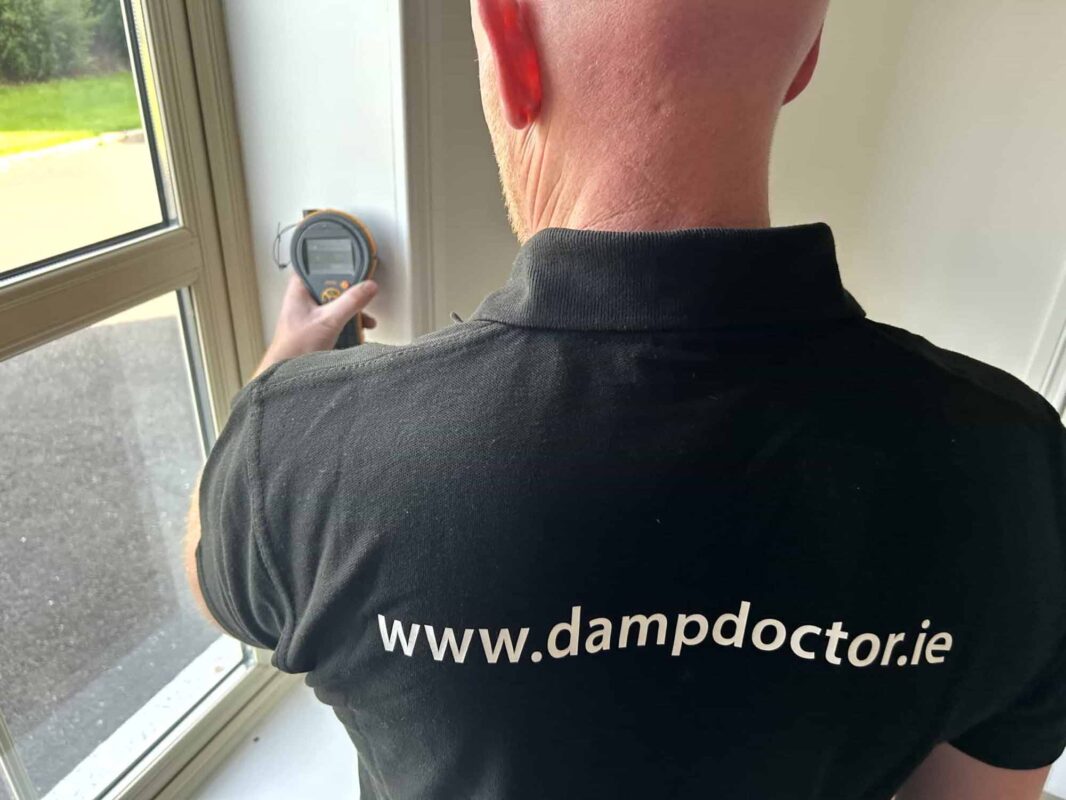
| 3 | Moisture meter readings | Calibrated moisture meters are used to take readings at multiple points and heights across affected areas. This tells us not only whether moisture is present, but how deep it extends and helps identify whether it is rising from the ground or penetrating from outside. |
| 4 | Thermal imaging (where required) | Thermal imaging cameras identify hidden moisture, cold bridging, and insulation gaps invisible to the naked eye — particularly useful for diagnosing penetrating damp and condensation problems behind finishes. |
| 5 | Diagnosis | We determine the type of damp present — rising, penetrating, or condensation — and identify the root cause rather than just the surface symptom. Where multiple types are present, we map each separately. |
| 6 | Written damp survey report | A detailed written report is issued covering all findings, photographic evidence, moisture readings and their interpretation, the identified cause, and a clear remediation plan with recommended next steps. |
Is a damp survey invasive? A standard Dampdoctor survey is primarily non-invasive. No drilling, lifting of floors, or removal of plaster is carried out without your explicit permission. In the majority of cases, moisture meters and thermal imaging provide a clear picture without any physical intervention. Invasive investigation is only proposed where it is genuinely necessary to confirm a suspected problem, and only after discussion with you.
What does a damp survey report include?
After every survey, Dampdoctor issues a detailed written report — a full professional document you can share with builders, solicitors, mortgage lenders, or insurers. Your report will include
- Full written findings from the on-site inspection of all affected areas
- Photographic evidence of all identified damp, mould, and structural issues
- Moisture meter readings with interpretation — not just raw numbers
- Identified damp type and root cause — rising, penetrating, or condensation — and the root cause
- Prioritised remediation plan with recommended treatments and suggested next steps
- Cost estimates for any remedial work identified (Premium Survey)
- Follow-up support from your surveyor after the report is received (Premium Survey)
Our Premium Survey also includes a thermal imaging report and, where applicable, visual mould test results. Reports are suitable for submission to mortgage lenders, insurance companies, and legal advisers.
Types of damp — what are we looking for?
There are three main types of damp that affect properties in Ireland. Each has different causes, signs, and treatments. Getting the diagnosis right is the most important step — treating the wrong type of damp wastes money and rarely solves the problem.
| Type | Common cause | Signs | Treatment | |
|---|---|---|---|---|
| ↑ | Rising damp |
Failed or absent damp-proof course (DPC); bridging of an existing DPC by raised ground levels, render, or debris | Tide marks at low level; salt deposits and efflorescence on brickwork; crumbling or discoloured plaster near floor level | DPC repair, chemical injection, or replacement; re-plastering with salt-resistant render; improving drainage |
| → | Penetrating damp | Water ingress through defective masonry, blocked or failed gutters, cracked render, failed flashings, or poor pointing | Damp patches that worsen after rain; staining from above or on external walls; musty smell in specific areas | Repair of external defects — repointing, gutter/roof maintenance, render repair, flashing replacement |
| ☁ | Condensation |
Warm moist air meeting cold surfaces; inadequate ventilation; poor insulation; thermal bridging in modern builds | Black mould in corners or behind furniture; condensation on windows; musty smell during cold months | Improved ventilation (PIV units, extractor fans); better insulation; heating advice; lifestyle guidance |
Accurate, Impartial Advice
At Dampdoctor, we understand how frustrating it can be when damp issues persist despite trying multiple solutions. Many clients come to us after spending money on treatments that have not worked, often after relying on free surveys that lacked proper testing or expert advice.
Free damp surveys are frequently offered by contractors who also sell remediation treatments. Because they have a commercial interest in finding problems, these surveys are not always impartial. With Dampdoctor’s independent approach, you receive a thorough survey from a qualified professional who has no financial incentive to recommend unnecessary work. We will only suggest a course of action if it is genuinely necessary to solve the problem — saving you time, money, and unnecessary stress.
Please select which type of survey is appropriate for you:
General Damp SurveyHow much does a damp survey cost in Ireland?
The cost of a damp survey varies depending on the size and type of the property, its location, and the level of investigation required. Older buildings, larger floor areas, and suspected problems in hard-to-access areas such as subfloors or roof spaces may take longer to assess thoroughly.
Dampdoctor offers two survey levels to suit different situations:
Standard Survey |
Premium SurveyRecommended for older properties and pre-purchase |
|---|---|
|
Everything in Standard, plus:
|
To get a clear price for your property, contact us before booking. We will confirm the survey level recommended for your situation and give you a fixed price with no hidden costs.
Who pays for a damp survey? In a property purchase the buyer typically commissions and pays for the survey as part of their pre-purchase due diligence. For an existing damp problem, the property owner pays. In rental properties, it is the landlord’s responsibility to investigate and resolve damp issues.
Is a damp survey worth it? An accurate diagnosis before treatment almost always saves money. Many of our clients come to us having already paid for treatments that failed because the underlying cause was never correctly identified. A professional damp survey costs a fraction of the price of unnecessary remediation work
Who needs a damp survey?
A professional damp survey is useful in a range of situations — not only when there is an obvious visible problem. The most common reasons our customers book a survey:
- Buying a property. A pre-purchase damp survey identifies hidden issues before completion. Findings can be used to renegotiate the purchase price or require the seller to carry out remedial work before exchange. Some mortgage lenders require a professional damp report before approving a loan.
- Selling a property. A survey before listing demonstrates transparency and removes the risk of a sale falling through after a buyer’s survey flags damp problems late in the process.
- Persistent damp or mould. If damp or mould has returned after previous treatment, a professional survey will find the root cause that earlier work missed.
- Landlords and property managers. Damp and mould are a legal concern for landlords in Ireland. A professional survey provides documented evidence that you have investigated and acted appropriately.
- After a flood or water damage. A moisture damage survey following flooding or a significant leak maps the full extent of moisture in the building fabric before drying and repair work begins — preventing hidden problems developing later.
- Routine maintenance of older properties. Damp-proof courses and external features degrade over time. Properties built before the 1970s often have no effective DPC at all. Physical DPCs typically last 20–30 years before they can fail or become bridged; chemical DPCs carry a similar guarantee when installed correctly.
.
Our Customer Reviews
Frequently asked questions about damp surveys
What is a damp survey?A damp survey is a professional inspection of a property carried out by a qualified Building Surveyor or Building Engineer to identify the presence, source, and extent of any dampness. Using calibrated moisture meters and thermal imaging cameras, the surveyor assesses walls, floors, and ceilings internally and externally. The inspection concludes with a detailed written report covering findings, cause, and recommended remediation. |
How long does a damp survey take?Most residential damp surveys take between one and three hours, depending on the size of the property and the complexity of the problem. Your surveyor will confirm expected timescales when booking. Larger commercial properties or complex cases may take longer. |
How much does a damp survey cost in Ireland?The cost depends on property size, type, and location. Dampdoctor offers Standard and Premium survey options — contact us for a specific quote. We will confirm the right survey level for your situation and give you a fixed price before any work is booked. |
Can I get a free damp survey?Free damp surveys are often offered by contractors who also sell damp-proofing treatments. Because they have a commercial interest in finding problems, these surveys are frequently not impartial and can result in unnecessary work being recommended. An independent paid survey from a qualified professional gives you unbiased findings — and often saves money in the long run by identifying what work is genuinely needed and what is not. |
How invasive is a damp survey?A standard Dampdoctor survey is primarily non-invasive. No drilling, lifting of floors, or removal of plaster is carried out without your explicit permission. In the majority of cases, moisture meters and thermal imaging cameras provide a clear picture without any physical intervention. Invasive investigation is only proposed where it is genuinely necessary to confirm a suspected problem, and only after discussion with you. |
Can you hide damp from a surveyor?It is very difficult to conceal damp from a professional surveyor using specialist equipment. Moisture meters detect elevated moisture levels behind fresh paint, new plaster, and wallpaper. Thermal imaging cameras reveal temperature differentials caused by hidden moisture that is completely invisible to the naked eye. If you are purchasing a property, you can be confident that a professional damp survey will identify concealed problems that a basic viewing would miss. |
Do I need a damp survey before buying a house?A professional damp survey is strongly recommended before purchasing any property, particularly buildings constructed before the 1970s. It identifies hidden moisture problems before you complete, giving you the information to renegotiate the purchase price or require the seller to carry out remedial work. Some mortgage lenders also require a professional damp report before approving a loan. |
Who pays for a damp survey?In a property purchase, the buyer typically commissions and pays for the damp survey as part of their pre-purchase due diligence. For an existing damp problem in a property you already own, the property owner pays. In rental properties, landlords are responsible for investigating and resolving damp and mould issues. |
What are the red flags on a damp survey report?Serious findings that warrant prompt attention include: active rising damp with a failed or absent damp-proof course; penetrating damp caused by significant structural defects; dry rot in timber (which spreads rapidly and causes serious structural damage); and high moisture readings across multiple areas simultaneously. More minor findings — such as localised condensation or isolated penetrating damp from a blocked gutter — are usually straightforward to remedy and should not cause undue concern. |
How many years does a damp proof course last?Physical damp-proof courses built into older properties can last 20–30 years before they degrade or become bridged by raised ground levels, render, or debris. Chemical injection DPCs installed by professional contractors typically carry a 20–30 year guarantee when installed correctly. Properties built before the 1940s may have no effective DPC at all — making periodic professional inspection particularly important. |
Does opening windows reduce damp?Opening windows helps reduce condensation-related damp by improving ventilation. and allowing moist indoor air to escape. However, it has no effect on rising damp or penetrating damp, which are caused by structural moisture ingress that ventilation cannot address. This is why an accurate professional diagnosis matters before attempting any remedy — the correct solution depends entirely on the cause. |
Is damp dangerous to health?Yes. Prolonged exposure to damp and mould can trigger or worsen respiratory conditions including asthma, bronchitis, and allergic reactions. Black mould in particular poses a significant health risk, especially for children, the elderly, and those with pre-existing respiratory conditions. Addressing damp and mould promptly protects not only the structural integrity of your property but your household’s health. |

Don’t Let Damp Take Hold
For further information regarding survey, diagnosis and our range of remediation solutions, contact us today or click on the button below to make a booking.