






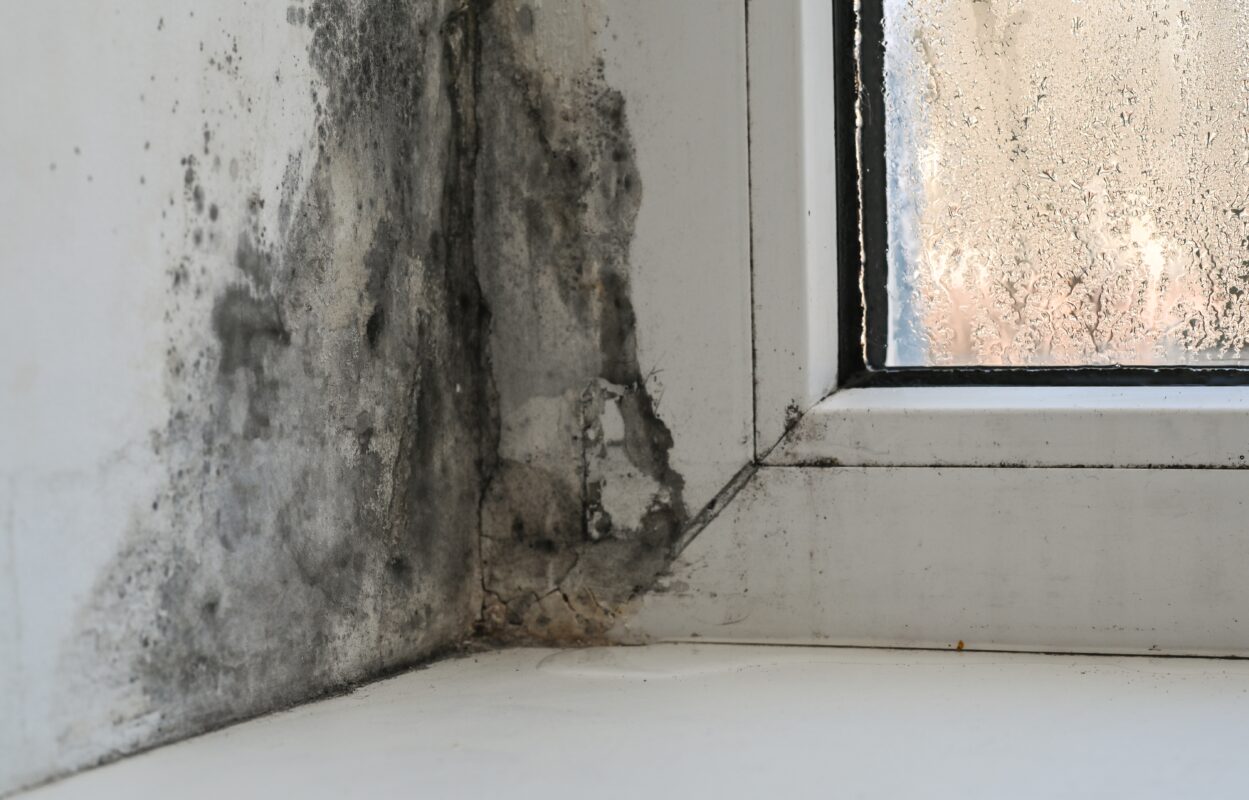
Wall mould is almost never “just a cleaning issue,” it’s a sign that moisture is getting into (or staying on) your wall surfaces. Proper mould removal only lasts when the underlying damp cause is correctly identified from the start, rather than guessed at.
At Damp Doctor, many customers come to us after spending significant money on the wrong fixes (anti-mould paints, dehumidifiers, repeated bleaching, even unnecessary building work) because the problem was misdiagnosed. A professional damp surveys first approach prevents wasted costs, lost time, and the cycle of mould returning every few weeks.
Key Takeaways
- Mould on walls is usually caused by excess moisture + poor ventilation, whether the moisture comes from condensation, leaks, penetrating damp, or rising damp.
- Once spores land on a damp wall surface, visible growth can begin in 24–48 hours if conditions stay favourable.
- The most common causes are condensation on cold walls, penetrating damp from outside, and rising damp at ground level.
- Wiping mould away (even with bleach) rarely solves the problem, if the moisture source remains, mould typically returns.
- Wall mould can aggravate asthma and allergies and is a higher risk for children, older adults, and anyone with respiratory conditions.
What Is Mould on Walls?
Mould is a fungal growth that appears as black, green, brown, or sometimes grey patches on internal wall surfaces. It often comes with a musty smell that can show up before you see any staining — especially when mould is forming behind furniture or inside wall cavities.
Mould develops from airborne spores that are present everywhere. Spores only become a problem when they land on a damp surface and have enough time to colonise. Walls offer plenty of “food” for mould: paint films, wallpaper paste, plaster dust, and everyday household dust are all enough to support growth.
Common wall mould types include Cladosporium, Alternaria and Aspergillus, which often thrive on cold external walls and window reveals where condensation forms. The term “toxic black mould” often refers to Stachybotrys chartarum, which usually requires prolonged wet conditions and is more likely in homes with ongoing leaks or significant water damage.
Typical examples of wall mould include:
- Fine black speckling in external wall corners, especially where walls meet ceilings
- Black or green spotting in bathrooms where steam lingers
- Fuzzy grey-black patches behind a wardrobe pushed against an outside wall
How Condensation Causes Mould on Walls
Condensation is the most common cause of wall mould in many homes because it can occur even when there is no structural damp problem. The key issue is this: warm indoor air holds moisture, and when that warm air touches a cold wall surface, the moisture condenses into water droplets on paint or plaster.
This tends to peak in colder months (especially when heating patterns are inconsistent), because external walls stay cold while indoor air warms quickly.
Moisture sources that drive condensation include:
- Cooking and boiling pans without lids
- Long hot showers
- Drying clothes indoors
- Breathing overnight (especially in bedrooms with closed windows)
Typical signs of condensation-related mould
- Fine black speckling in corners and along ceiling lines
- Mould behind furniture where air can’t circulate
- Black spotting around window reveals and on windowsills
- Worse growth on north-facing, shaded external walls
Poor ventilation makes this dramatically worse. If trickle vents stay shut, air bricks are blocked, or extractors aren’t used, humid air lingers and repeatedly wets cold surfaces.
A common real-world scenario: a flat where clothes are dried on radiators all winter with windows kept closed. Mould appears on the bedroom’s external wall even though the wall itself isn’t structurally damp — the surface is simply being repeatedly “rewet” by indoor humidity.
Penetrating Damp and Mould Growth on Walls
Penetrating damp happens when moisture moves horizontally through an external wall due to defects on the outside of the property. Unlike condensation (which is driven by indoor moisture), penetrating damp usually comes from rainwater getting into the wall.
Common causes include:
- Blocked or leaking gutters and downpipes
- Cracked render or damaged pointing
- Gaps around window frames
- Faulty flashing where roofs meet walls
- Porous brickwork on exposed elevations
Signs that suggest penetrating damp
- Irregular damp patches that can appear at different heights
- Flaking paint and crumbling plaster
- Staining that worsens after rainfall
- Mould concentrated around the damp patch (rather than in corners)
This is where misdiagnosis gets expensive: many homeowners treat the mould repeatedly, repaint, or run dehumidifiers, but the wall keeps being soaked from outside. Until the external defect is fixed, mould on the inside will continue to return.
Rising Damp and Ground Moisture as a Cause of Wall Mould
Rising damp occurs when moisture is drawn up from the ground into walls by capillary action. It typically affects the lower section of ground-floor walls and is often linked to a failed, missing, or bridged damp proof course (DPC).
It commonly shows as:
- Damp and deterioration along skirting boards
- Peeling paint and crumbling plaster at low level
- Salt deposits (white, powdery marks)
- A persistent musty smell near the floor
Even homes with a DPC can develop rising damp if the DPC is bridged, for example:
- Soil or flower beds built up above DPC height
- Patios laid too high against external walls
- Internal plaster bridging to damp masonry
- Floor screeds connecting moisture into the wall
If mould is concentrated at the base of walls (rather than corners and window reveals), rising damp becomes a stronger possibility — and it needs the right fix, not repeated cleaning.
This is exactly why Damp Doctor repeatedly sees customers who have already spent heavily on “solutions” that didn’t match the cause. A diagnostic-first approach stops the cycle at the start: book a survey, identify the moisture source, then treat it properly. That’s what allows professional mould removal to actually stay effective.
Indoor Habits and Building Features That Encourage Wall Mould
Even when the moisture source is “everyday living,” mould becomes far more likely when ventilation is poor or walls stay cold.
Habits that raise indoor humidity
- Drying clothes indoors
- Long steamy showers without extraction
- Cooking without lids / poor kitchen ventilation
- Keeping windows closed for long periods
- Using unvented heaters
- Overwatering houseplants
Furniture placement and cold spots
Large furniture pushed against external walls creates dead-air zones. The wall behind stays colder, moisture lingers, and mould forms out of sight — sometimes on both the wall and the back of furniture.
Building features that increase risk
- Solid walls with limited insulation
- Older glazing and cold window frames
- Airtight upgrades without ventilation improvements
- Thermal bridges (lintels, concrete beams) creating cold patches
The Smart Way to Stop Wall Mould Returning
The most reliable way to stop mould coming back is to treat it as a moisture diagnosis problem, not a cleaning task.
Practical steps include:
- Keep indoor humidity in check (ideally 30–50%)
- Use extract fans (vented outdoors) in bathrooms and kitchens
- Dry wet materials quickly (within 24–48 hours)
- Improve insulation where cold spots are forming
- Fix external defects (gutters, pointing, render, flashing) promptly
- Avoid trapping air behind furniture on outside walls
If you’re repeatedly cleaning mould and it keeps returning, it’s a strong sign the true cause hasn’t been identified yet. That’s where professional damp surveys save the most money: they prevent misdiagnosis, repeated redecorating, and the endless frustration of short-term fixes that fail.
