


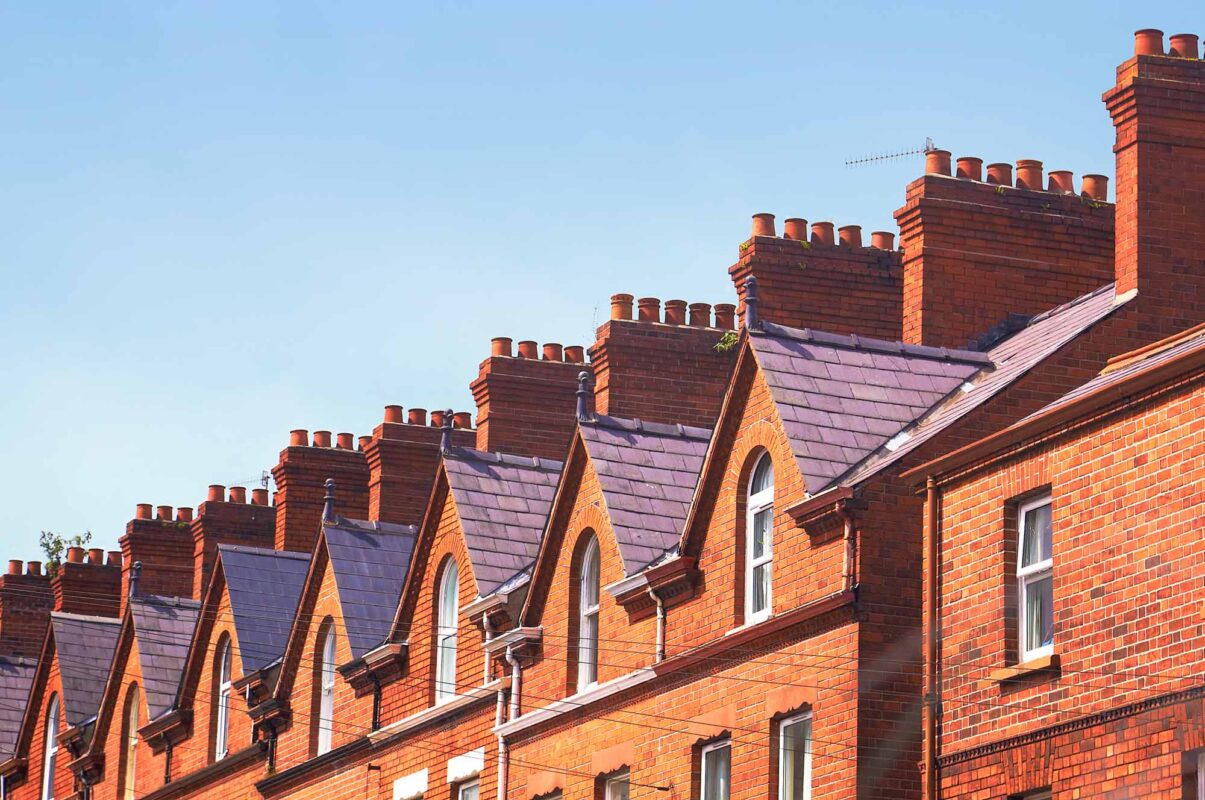

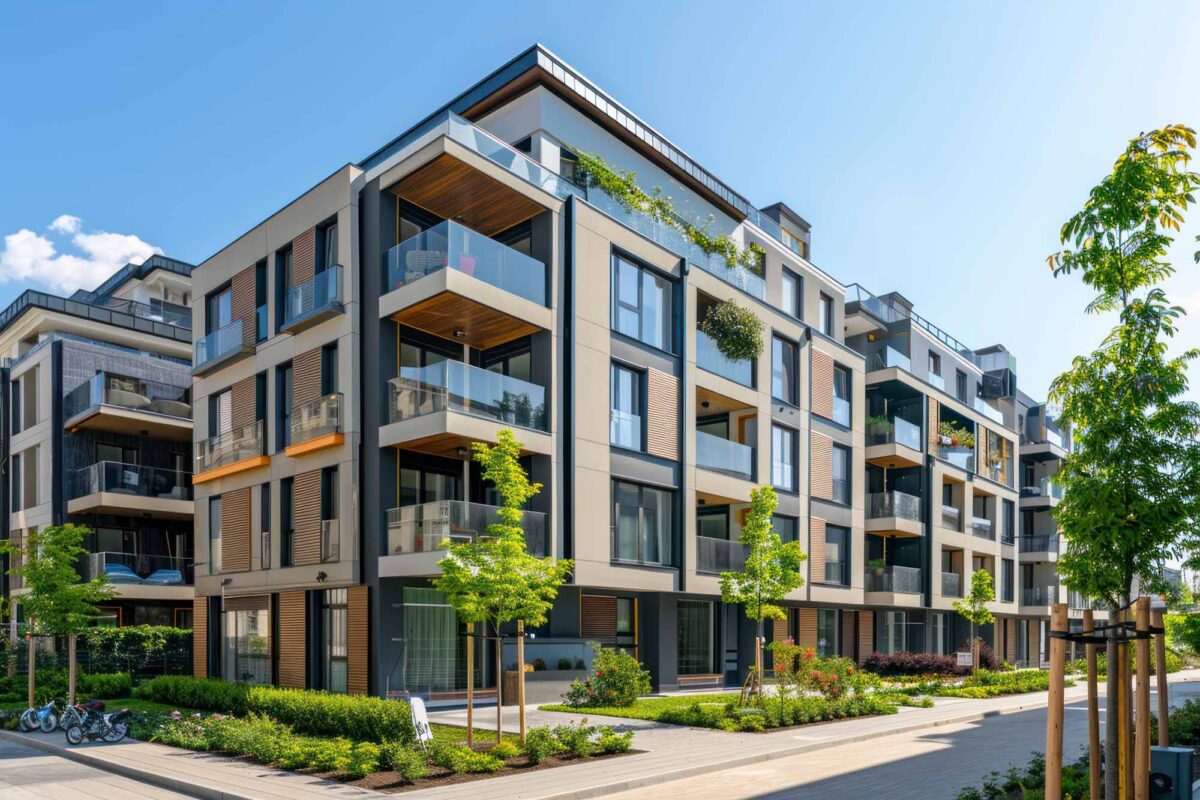

Dublin’s housing stock spans nearly three centuries of construction. A Georgian terrace on the north side, a Victorian semi in Rathmines, a 1940s council house in Crumlin, and a modern apartment in Docklands — each was built differently, with different materials, different details, and a completely different relationship with moisture.
That matters enormously when it comes to damp. The most common damp problems in a Georgian building are not the same as those in a 1930s cavity-wall house. The remediation approach that works for one can fail — or cause damage — in the other. Understanding your building era is the first step toward understanding what might be causing your damp problem and what a professional survey will be looking for.
Why Building Era Matters for Damp Diagnosis
Every era of construction has characteristic damp vulnerabilities — shaped by the materials available at the time, the construction methods used, and the way buildings have been modified since. When DampDoctor surveys a Dublin property, the building era is one of the first things assessed, because it tells an experienced surveyor where to look and what mechanisms are most likely at play.
It also helps explain why the same symptom — say, a damp patch on a ground floor wall — can have completely different causes in different properties, and why a correct diagnosis requires physical inspection and testing rather than visual assessment alone.
Georgian Dublin (c. 1714–1830)
Georgian buildings are among Dublin’s most architecturally significant — and among its most damp-prone. Built with solid brick or stone walls and lime-based mortars, they were designed to manage moisture through breathability: the wall fabric absorbed moisture and released it again as conditions allowed.
Typical damp risks in Georgian properties:
- Rising damp — Many Georgian buildings predate modern damp proof courses entirely. Ground moisture can travel upward through porous masonry, particularly where external ground levels have been raised over the decades.
- Penetrating damp — Solid walls offer no cavity to interrupt rainwater. Driving rain, particularly on exposed elevations, can push moisture through defects in render, pointing, or parapet details.
- Trapped moisture from modern finishes — This is one of the most common causes of accelerated damp damage in Georgian properties. When breathable lime walls are sealed with cement render or modern impermeable plasters, moisture that would normally evaporate becomes trapped inside the wall fabric.
- Basement and half-basement issues — Common in Dublin’s Georgian terraces, these spaces have direct ground contact and are particularly vulnerable to rising and penetrating damp.
A professional survey of a Georgian property will assess external wall condition, ground levels, basement details, and internal wall moisture — not just the visible symptom.
→ Full Guide: Damp in Georgian Buildings in Dublin
Victorian and Edwardian Dublin (c. 1830–1910)
Victorian and Edwardian properties make up a large proportion of Dublin’s inner suburbs — Rathmines, Ranelagh, Drumcondra, Clontarf, and much of the southside. Like Georgian buildings, these are typically solid-wall construction, but with some differences in detailing and floor construction that create their own damp profile.
Typical damp risks in Victorian and Edwardian properties:
- Rising damp — DPCs were introduced during the Victorian era but weren’t universal, and many have deteriorated or been bridged by raised ground levels or new flooring.
- Subfloor moisture — Victorian properties typically have suspended timber ground floors with a void beneath. If underfloor ventilation is blocked — by debris, added insulation, or sealed air bricks — moisture accumulates and timber decay follows.
- Condensation — Solid walls are thermally cold on the inside surface in winter. Without adequate heating and ventilation, condensation on wall and window surfaces is common, particularly in rooms at the rear of the property.
- Chimney and roof detail failures — Victorian rooflines are often complex, with multiple chimney stacks and valley gutters that require regular maintenance.
→ Full Guide: Damp in Victorian and Edwardian Buildings in Dublin
1930s–1950s Dublin Houses
The inter-war and post-war period produced a very different type of Dublin housing — the cavity wall semi-detached and terraced houses that define suburbs like Marino, Cabra, Drimnagh, Terenure, and much of south Dublin county. Cavity wall construction was intended to manage moisture better than solid walls, but this era has its own characteristic failure modes.
Typical damp risks in 1930s–1950s properties:
- Cavity bridging — Wall ties, mortar droppings, or insulation fill can create a bridge across the cavity, allowing moisture to cross from the outer to inner leaf. This causes damp patches at mid-wall height, often appearing after heavy rainfall.
- Concrete and render moisture retention — Unlike earlier breathable construction, many 1930s–50s properties used harder renders and concrete elements that absorb and retain moisture differently.
- Thermal bridging — Solid concrete lintels, window reveals, and floor-to-wall junctions can create cold spots where condensation forms repeatedly.
→ Full Guide: Damp in 1930s–1950s Dublin Houses
Modern Dublin Apartments (2000–Present)
Modern apartments — particularly those built during and after the Celtic Tiger era — present a very different damp challenge. These buildings are typically highly airtight, with complex junctions and mechanical ventilation systems. When those systems work well, moisture is managed effectively. When they don’t, the results can be significant.
Typical damp risks in modern apartments:
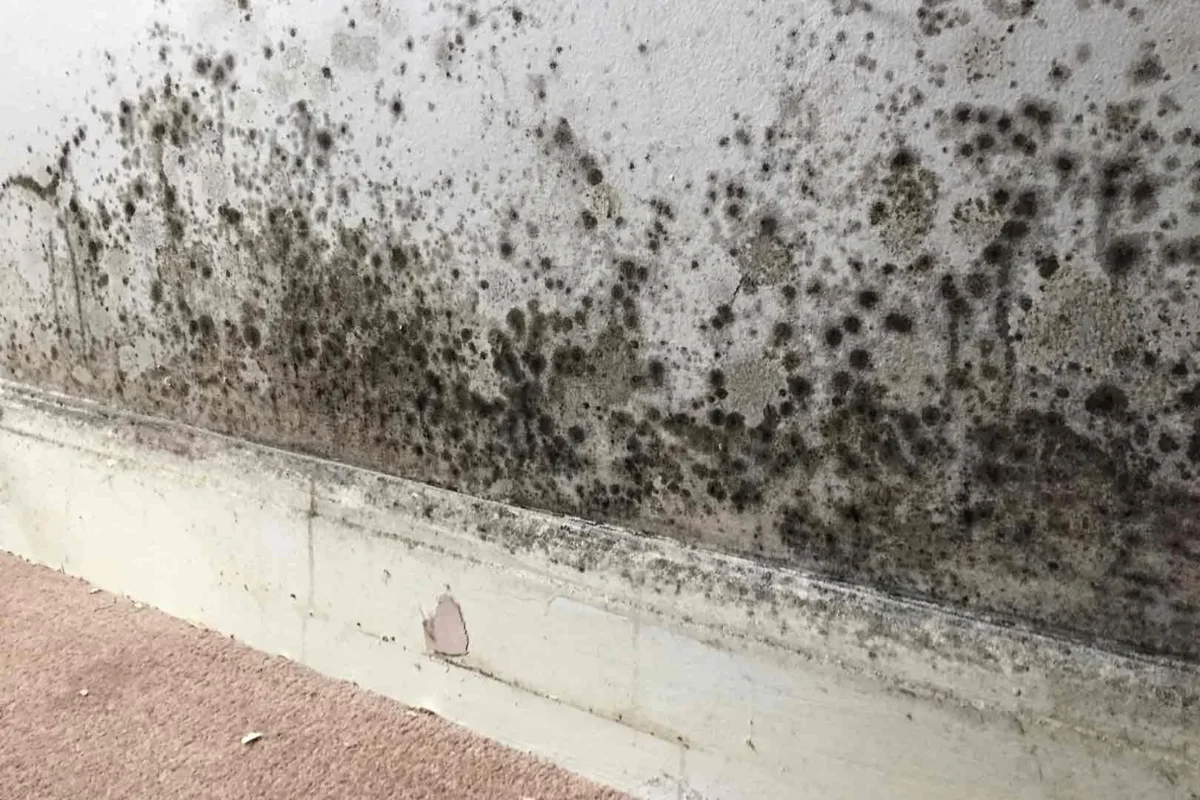
- Condensation and mould — The most common complaint in modern apartments. High airtightness combined with inadequate or poorly maintained mechanical ventilation leads to elevated indoor humidity and mould growth — typically at corners, reveals, and behind furniture.
- Thermal bridging — Complex structural junctions (balcony connections, floor-to-wall interfaces, window frames) can create cold spots where condensation deposits repeatedly, even in otherwise well-insulated buildings.
- Detailing and junction failures — Flat roof details, balcony waterproofing, and window installation quality vary significantly. Defects at these junctions are a common source of water ingress in apartments built during the high-volume construction period.
- Interfloor and service penetration leaks — In apartment buildings, water from upper floors or poorly sealed service penetrations can cause damp in lower units that appears unrelated to any external defect.
→ Full Guide: Damp in Modern Dublin Apartments
The One Thing Every Era Has in Common
Regardless of whether your home is a Georgian townhouse, a Victorian terrace, a 1940s semi, or a contemporary apartment — the principle is the same: visible damp symptoms do not reliably indicate the cause. The same damp patch can result from rising damp, penetrating water, condensation, or a combination of all three.
Identifying the correct mechanism requires a professional survey with systematic testing — not a visual inspection, and not a diagnosis based on online descriptions of what damp “looks like.”
Attempting to treat damp without a correct diagnosis is one of the most common reasons remediation work fails and has to be repeated.
Book a Professional Damp Survey in Dublin
DampDoctor provides professional damp surveys and remediation across Dublin, covering all property eras and building types.Every Dampdoctor survey includes our in-depth testing procedures, developed through decades of industry experience and grounded in proven surveying and engineering methodologies. This comprehensive approach allows us to accurately diagnose the root cause of damp and mould issues, providing homeowners and property professionals with clear, reliable findings and a detailed scope of works tailored to deliver long-term solutions.
Book your survey → DampDoctor Dublin Damp Solution
Read next in this series: – Damp Problems in Dublin: Why They’re So Common — Pillar Guide – Damp Problems by Dublin Building Era — Hub Page – Damp in Victorian and Edwardian Buildings in Dublin – Damp in 1930s–1950s Dublin Houses – Damp in Modern Dublin Apartments
