






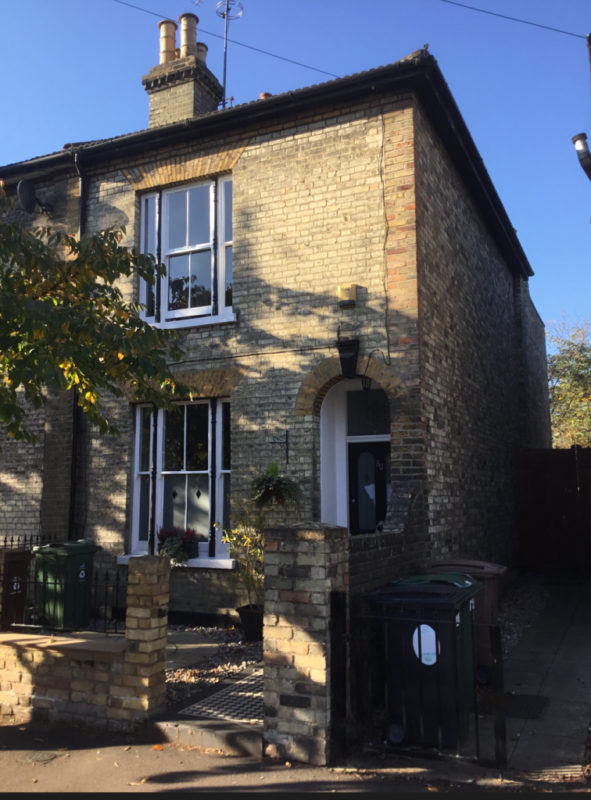
Victorian and Edwardian properties define much of inner suburban Dublin. Rathmines, Ranelagh, Drumcondra, Clontarf, Phibsborough, Ringsend, and large stretches of the southside are built almost entirely from this era’s housing stock. Red brick terraces, bay windows, decorative timber details, and high ceilings — these are among the most sought-after homes in the city.
They are also buildings that require genuine understanding when it comes to damp. Like Georgian properties, Victorian and Edwardian homes were built with solid walls and breathable materials. But they have their own distinct construction details, their own characteristic failure points, and their own pattern of damp problems.
How Victorian and Edwardian Buildings Were Constructed
Victorian and Edwardian homes in Dublin were typically built with solid brick walls, lime mortar, and suspended timber ground floors above a ventilated subfloor void. Like Georgian buildings, they relied on breathable materials to manage moisture.
Key differences from earlier Georgian construction include:
- More widespread use of red brick rather than stone
- Suspended timber ground floors as standard — creating a subfloor void that requires active ventilation
- More complex rooflines with multiple chimney stacks, bay window roofs, and rear return extensions
- Damp proof courses introduced, though not universally and with variable quality
Where these buildings remain largely unmodified, they often manage moisture remarkably well. The problems typically arise where modifications have disrupted the original moisture management system.
The Most Common Damp Problems in Victorian and Edwardian Dublin Homes
1. Rising Damp
Rising damp is common in Victorian and Edwardian properties for several reasons. DPCs were introduced during this era but installation was inconsistent — many properties either have no DPC or one that has deteriorated after 120-plus years. Additionally, decades of maintenance work, new flooring, and external landscaping have frequently raised internal or external levels to a point where an existing DPC is bridged.
Signs of rising damp in Victorian and Edwardian properties:
- Tide marks and salt staining on lower wall surfaces
- Blown or deteriorating plaster at ground floor level
- Decay in skirting boards, particularly at ground floor
- Persistent damp smell at lower levels, worse in winter
As with all damp types, these signs overlap with other mechanisms. A professional assessment with appropriate testing equipment is required to confirm the diagnosis.
2. Subfloor Moisture and Suspended Floor Decay
This is one of the most distinctive and serious damp risks in Victorian and Edwardian properties — and one of the most frequently overlooked.
The suspended timber ground floor, with its ventilated void beneath, works well when air can circulate freely under the floor. When that ventilation is blocked or restricted, moisture accumulates in the void and timber decay follows — often silently, over years, before it becomes apparent at surface level.
Common causes of blocked subfloor ventilation in Dublin Victorian properties:
- Air bricks blocked or covered — by raised external ground levels, new paving, or render applied over them
- Debris in the void — rubble, old insulation, or organic material holding moisture
- Insulation installed incorrectly — insulation between joists without maintaining ventilation to the void traps moisture against the timber
- Internal floor build-up — new screeds or floor finishes raising the internal level and reducing void height
The consequence is wet rot or dry rot in floor joists, floorboards, and the base of partition walls. By the time the floor surface shows visible signs — soft spots, slight movement, a musty smell — decay may be well advanced.
A damp survey of a Victorian property should always include assessment of subfloor ventilation and, where possible, inspection of the subfloor void.
3. Penetrating Damp
Solid wall construction means no cavity to interrupt rainwater. Victorian and Edwardian properties have significant areas of external envelope that require regular maintenance:
- Bay windows — the junction between bay roof and main wall is a frequent source of water ingress
- Rear return extensions — valley gutters between the main house and return are a common problem point
- Multiple chimney stacks — Victorian properties often have three or more chimney stacks requiring regular maintenance
- Brick pointing — Victorian red brick needs repointing periodically
Penetrating damp typically presents as localised patches that worsen after heavy or wind-driven rainfall.
4. Condensation
Solid brick walls are thermally cold on the inside surface in winter. Without adequate heating and ventilation, warm moist indoor air deposits moisture on cold surfaces — window reveals, external wall corners, and areas behind furniture against external walls.
Condensation has increased as a problem in Victorian and Edwardian homes as occupants improve airtightness — draught-proofing doors and windows, blocking fireplaces — without adding equivalent ventilation.
The Modifications That Cause the Most Problems
A consistent pattern emerges across DampDoctor surveys of Victorian and Edwardian Dublin properties:
- Cement repointing of original lime brick joints
- Blocking air bricks during external works
- Sealing fireplaces without adding alternative ventilation
- Applying impermeable finishes to solid walls
- Installing insulation incorrectly in the subfloor void
Why Self-Diagnosis Doesn’t Work in Victorian Properties
The layered history of a Victorian Dublin home means that damp symptoms are rarely straightforward. A damp patch on a rear return wall might be penetrating damp, rising damp, condensation, or a combination. Treating based on appearance alone is one of the primary reasons damp remediation in these properties fails and has to be repeated.
Book a Damp Survey for Your Victorian or Edwardian Dublin Home
DampDoctor provides professional damp surveys across Dublin with specific experience in Victorian and Edwardian building stock. Every survey includes thorough external assessment, subfloor inspection where accessible, and systematic internal testing for all three main damp mechanisms.
Book your survey → DampDoctor Dublin Damp Solution
Read next in this series: – Damp Problems in Dublin: Why They’re So Common — Pillar Guide – Damp Problems by Dublin Building Era — Hub Page – Damp in Victorian and Edwardian Buildings in Dublin – Damp in 1930s–1950s Dublin Houses – Damp in Modern Dublin Apartments
